Monday, March 9, 2015
How to wrap a gift card hint it involves power tools
This Christmas I was tasked with buying gifts for three of my nephews. I bought two gift cards from West 49 and another from Chapters. For some of you these may be fine gifts to give and you are happy to check off three more items on your list. However, my goal in giving any gift is to first give them what they want and second to try and surprise and delight them with something unexpected. A gift card is not surprising or particularly delightful.
So... what to do? For the first gift card, I took a typical approach and wrapped it in ever increasing sizes of boxes with lots of duct tape and topped it off with pretty ribbon and a bow. It was a very delightful looking gift. But, in the end I decided this was a little too typical and unwrapped it while I pondered other ideas.
It was while wandering through the garage that I received my inspiration - an old eight foot 2x6. Here are the steps that followed.
1. Using a circular saw, cut a slit about 3 inches deep and 6 inches long into the edge of the 2x6. After making the cut, make sure that the gift card will fit inside the slit.


2. Next, decide on a shape to create out of the wood (for this example I used a Christmas bell ornament) and cut the 2x6 into pieces accordingly and nail or screw the pieces together to form your masterpiece. Depending on the size of the gift card you may need to cut an additional slit in a second piece of the 2x6 so that the card will fit properly inside your wooden ornament.
Before wrapping your ornament you may want to secure a ribbon to the top so that you can hang it up. At the top of the ornament, hammer in a nail half way. Now wrap a small piece of ribbon around the nail and then bend the nail over completely so that it holds the ribbon in place.

3. The finished and fully wrapped product!


4. Now repeat with other shapes as necessary until all your gift cards are wrapped. I created a Christmas bell, a Christmas tree, and a Christmas ball.

The reactions you get may vary, but my nephews used the words best and ever after opening their gift cards. Also, the look on their faces after they unwrapped their homemade ornaments and before they realized there was more unwrapping to do was priceless.
Hopefully I can wrap more gift cards next year. My brother has already promised it will involve acetlyane torches.

Wednesday, March 4, 2015
The Mindmapping Toolbox 100 Tools Resources and Tutorials
- Link to article
- Related Posts - 99 Mind Mapping Resources..., Mind Mapping Search & FreeMind (Free Software)
 WHAT?
"Sometimes the difference between a successful project and one that spirals out of control is getting all your thoughts and ideas laid out before you even get started. One of the best ways to do this is with mind maps, which act as a visual representation of all that stuff you’ve got floating around in your head. This kind of radiant thinking can be a great way to start out working on anything, from redecorating your house to landing a huge project, and there are loads of resources out there to make mind mapping even easier..."
JUICE?
The Mindmapping Toolbox (or article) provides a list of 100 tools, resources, blogs, articles and everything else you might need to get started making a road map of your mind.
This mindmapping resource list has broken the triple digit barrier. WOW! Interestingly, this list has one more mindmapping item compared to Eric Herberts famous list of 99 Mindmapping stuff. I have yet to compare these two lists item for item (No time!), but surely you will find much of the same stuff here. I suppose Stephen Downes would probably get dizzy again with such a huge list one, and request for one mindmapping tool that works really well. I will therefore use my seventh sense (practical intelligence or common sense!) to extract out some of the juicy resources in this list. Here are some of those resources I have explored (Meaning I like it!), or would like to explore further sometime in the near, or distant future:
- FreeMind: This popular Java-based mind mapping software makes it simple to create mindmaps that can be “folded” and integrated with web links.
- MindMapping.org: Find all the information you ever needed to know about mind mapping at this website and learn all about the software that is out there to help you make the best mind maps.
- Vilayanur Ramachandran: A journey to the center of your mind: Behavioral neurologist Vilayanur Ramachandran talks about how the mind, phonemes and visual data all work together, just like in mind maps.
- Tony Buzan on Mind Mapping: One of the most well-known advocates of mind mapping, Tony Buzan, discusses how to tap into your internal mental power in this video.
- List of Mind Mapping Software: This list on Wikipedia offers a guide to all of the mind mapping software out there.
- Guerilla Marketing with Mind Maps: Didn’t think mind maps had anything to do with marketing? They can help greatly, and this article will show you how you can use them in your next campaign.
- How To Use Mind Maps To Teach Difficult Grammar Points: Read this article to find out how you can use mind maps to teach and represent just about anything.
- MindMapping Blog: Like the name suggests, this blog is full of posts about mind mapping, primarily focusing on software and web applications.
- MindMapping 2.0: This blog discusses how and where mind mapping and web 2.0 meet, as the blogger works on his own mind mapping software.
- Rapid Problem Solving with Post-It Notes: This book by David Straker shows how you can organize your thoughts into mind maps using only Post-It notes.
I appreciate that the mindmapping list is organized based on specific categories (Free Visualization Tools, Tutorials and How-Tos, Articles, Videos, etc.), and includes useful and short descriptions for each item, but I would also love to see some kind of ranking (or rating) based on each category. I know this can be very subjective (and takes time!), but if the author(s) is/are (an) expert(s) in this area, it would certainly add some value to our willingness to really explore this long list. As we are moving to an era where information is increasingly being organized by people and machines (in creative and informative ways), we will want additional value to increase our efficiency to find the right stuff. Rankings, ratings, reviews, favorite lists, hits, etc. certainly can add some value and spice to a list.
Although, I like the Mindmapping Toolbox, I do hope to see more creative and informative ways in presenting such long lists in the future. Perhaps, they can learn a few lessons from Vic Gees excellent razor-sharp mindmapping search space :)
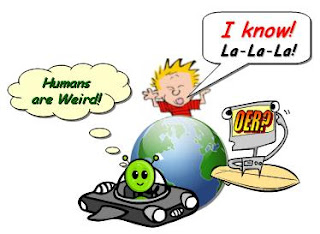
OER Articles Reports Sites and Tools Getting Dizzy!
- Reference - OER Introduction Booklet
- Related Post - Giving Knowledge For Free & OER Stories
 OER?
"“Free sharing of software, scientific results and educational resources reinforces societal development and diminishes social inequality. From a more individual standpoint, open sharing is claimed to increase publicity, reputation and the pleasure of sharing with peers.” - Jan Hylen, OECD Centre for Educational Research and Innovation (Also check out Wikipedia - OER!)
Difference Between Educational Content Accessible for FREE and OER?
"A resource accessible for FREE over the Internet does not always signify that it is not protected by a copyright nor forbidden for reuse and reproduction. In fact, most of the time, the content is protected by copyrights not allowing reproduction. Where else an OER is distributed, licensed and shared with the background willingness to enable the user to adapt and use the content freely. There fore, the model of distribution and the license is always clearly mentioned (Source: OER Introduction Booklet)."
 JUICE?
After exploring the OER Introduction Booklet further during the weekend, and a bit of reflection, I realize (dont ask me why!) I want to highlight a few valuable articles, reports, sites, and tools that we can explore further to get a better understanding about what OER is, why it is important, how we can use it, and how we can participate and contribute to make a difference. Most of the OER resources in this list are extracted from Thomas Bekkers excellent OER Introduction Booklet (Thanks!):
- By the International Institute for Educational Planning (IIEP): OER Glossary
This Wiki space maintained by the International Institute for Educational Planning (IIEP)
shares an open glossary of terms that have been used in the IIEP community discussions on Open Educational Resources (OER). - Giving Knowledge for Free: The Emergence of OER
The report offers a comprehensive overview of the rapidly changing phenomenon of Open Educational Resources and the challenges it poses for higher education. It examines reasons for individuals and institutions to share resources for free, and looks at copyright issues, sustainability and business models as well as policy implications. It will be of particular interest to those involved in e-learning or strategic decision making within higher education, to researchers and to students of new technologies ...more - Open Educational Resources (OER) Stories
"Case studies/stories of how institutions and individuals have developed or used OER would be a useful resource for awareness raising activities. Telling stories is a very powerful means of transmitting information. As one Community member (Zaid Ali Alsagoff) expressed it, "Stories inspire people and bring movements to life." - A Review of the Open Educational Resources (OER) Movement (PDF)
This report examines The William and Flora Hewlett Foundation’s past investments in Open Educational Resources, the emerging impact and explores future opportunities. - OER and Dissemination of Knowledge Indeveloping Countries
By David Steve Matthe. Why should anyone give away anything for free? Free sharing means broader and faster dissemination, and more people get involved in problem-solving, which means rapid improvement and faster technical and scientific development, and that free-sharing of software, scientific results and educational resources movements re-enforces societal development and diminishes social inequality, etc. - Why are Individuals and Institutions Using and Producing OER?
This excellent paper by Jan Hylen, introduces findings from a recent OECD study. Introductory remarks: "The first and most fundamental question anyone arguing for free and open sharing of software or content has to answer is – why? Why should anyone give away anything for free? What are the possible gains in doing that? Please read :) - Getting Started with Reusability? An introduction to Reusability for Digital Learning Resources
This article, published by the Reusable Learning project, provides an interesting overview
about the concept of "reusability" and knowledge transmission from the early age to todays modern societies to finally introduce reusability for digital learning resources and the systems that support them. - PRODUCE & REMIX OER: Author and Modify
This 60-minute tutorial provides information on and practical tasks in creating and modifying open content in an open process formats that can be published as open educational resources and tools, that support this process how to use standards and metadata. - OER and practices: a Slide Show with Audio introducing OERs
This slide show was published on Flickr.com and produced by Leigh Blackall. It includes audio, pictures and an article exploring OERs and practices in a tertiary educational institution. - By IIEP: OER Useful Resources
This list of links to OER initiatives, resources and tools was compiled following the first IIEPdiscussion forum on Open Educational Resources (24 October - 2 December 2005). It owes a considerable debt to Zaid Ali Alsagoff (That is my name! Cool!), who put together a first list of OER initiatives as an outcome of the forum. Practitioners will find some useful lists of Web sites related to OERs including portals, tools, OER development and publishing initiatives, communities, journals and more. - 80 OER Tools for Publishing and Development Initiatives
Arranged in alphabetical order, this list includes 80 online resources that you can use to learn how to build or participate in a collaborative educational effort that focuses on publication and development of those materials.
Also, if you are looking for a massive list of potential learning tools, you might want to check out UNESCO Free & Open Source Software Portal (Currently 604 tools!). Here are links directly to the major categories:
- Communication
- Courseware Tools
- Development Tools
- Operating System
- Productivity Tools
- Science and Education
- Digital Library
- Health
- Virtual Laboratory
Finally, if you are looking for a list of learning tools that combine commercial, open source, and free stuff, I believe Jane Knights directory of 1700+ learning tools (probably more now!) would be of great help (if you got time!).
Oh Man! I am getting dizzy! This post is heavy! As Stephen Downes says, "See, heres the thing, though. I dont want 99 (mind mapping) resources, tools, and tips. I want one. That works. Really well. (Source)." So, if you ask me to recommend only one learning tool to jump start an OER initiative, I would probably pick Moodle. Hey, dont jump the gun! Why think one! What about your mission, needs, requirements, analysis, bla, bla, bla... Before you know it, nothing really happens! Perhaps, we can learn a few lessons from New Zealands ongoing OER project. Goals, Strategy, Expertise, Pedagogy, Instructional Design, Content, Tools (Moodle, Fedora, etc.), Relevance... :)